Buying casual shoes may seem simple, but it’s surprisingly easy to make costly mistakes. From choosing the wrong size to prioritizing style over comfort, a poor decision can leave you with shoes you barely wear, sore feet, or money wasted on low-quality pairs.
Whether you’re shopping for daily wear, office-casual outfits, or weekend looks, understanding Casual shoes buying mistakes to avoid can save you time, money, and discomfort. This guide is designed for men and women who want stylish, comfortable, and long-lasting casual shoes—without regrets.
Let’s break down the most common mistakes people make and how you can avoid them like a smart buyer.
Why Avoiding Casual Shoe Buying Mistakes Matters
Casual shoes are often worn more frequently than formal footwear. That means:
- More wear and tear
- Greater impact on foot health
- Higher long-term cost if replaced often
Making the right choice ensures:
- Better comfort throughout the day
- Improved posture and foot support
- Shoes that actually match your lifestyle
1. Choosing Style Over Comfort
The Mistake
Many buyers fall in love with a shoe’s design and ignore how it feels on the foot.
Why It’s a Problem
Stylish shoes without proper cushioning or support can cause:
- Foot pain
- Heel strain
- Knee and back discomfort
What to Do Instead
Always balance style with comfort. Look for:
- Cushioned insoles
- Breathable lining
- Flexible yet supportive soles
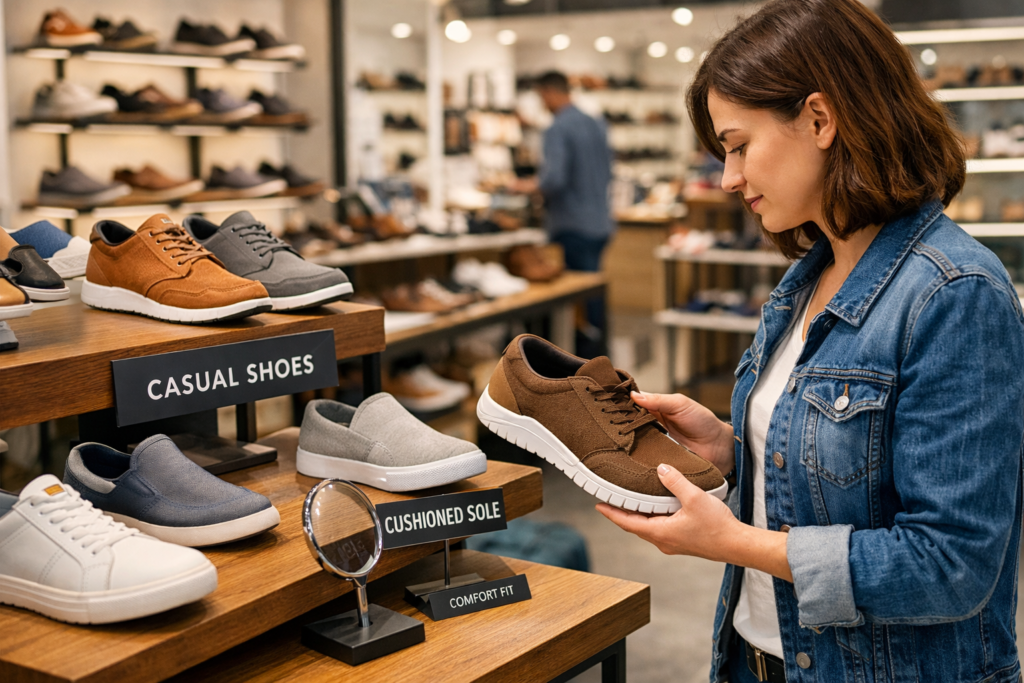
Pro Tip: Walk around the store for at least 5 minutes before deciding.
2. Buying the Wrong Size (Most Common Mistake)
The Mistake
Assuming your shoe size is the same across all brands.
Why It’s a Problem
Sizes vary between brands and even between shoe styles. Ill-fitting shoes can cause:
- Blisters
- Corns and calluses
- Long-term foot issues
Smart Buying Tip
- Try shoes in the evening when feet are slightly swollen
- Leave about a thumb’s width of space at the toe
- Ensure the heel doesn’t slip while walking
3. Ignoring Foot Shape and Arch Type
The Mistake
Buying shoes without considering whether you have flat feet, high arches, or wide feet.
Why It’s a Problem
Shoes that don’t match your foot type can lead to discomfort and uneven pressure.
Better Approach
Identify your foot type:
- Flat feet: Look for arch support
- High arches: Choose cushioned soles
- Wide feet: Avoid narrow toe boxes
4. Not Checking the Shoe Material
The Mistake
Focusing only on appearance and skipping material quality.
Why It’s a Problem
Low-quality materials wear out faster and trap heat and moisture.
Materials to Prefer
| Material | Best For | Benefits |
| Genuine Leather | Daily & office wear | Durable, breathable |
| Suede | Casual outings | Stylish, soft |
| Mesh/Fabric | Summers | Lightweight, airy |
| Synthetic | Budget options | Easy maintenance |
Avoid: Hard synthetic materials that don’t flex.
5. Overlooking Sole Quality
The Mistake
Ignoring the sole construction entirely.
Why It’s a Problem
A poor sole affects grip, durability, and comfort.
What to Look For
- Rubber soles for grip
- EVA or foam midsoles for cushioning
- Anti-slip patterns for daily use
6. Buying Casual Shoes for the Wrong Purpose
The Mistake
Using one pair for everything—office, travel, long walks, and casual outings.
Why It’s a Problem
Different activities demand different shoe features.
Match Shoes to Usage
- Office casual: Loafers, derby-style casual shoes
- Daily errands: Lightweight slip-ons
- Walking & travel: Cushioned casual sneakers
7. Ignoring Climate and Season
The Mistake
Buying shoes without considering weather conditions.
Why It’s a Problem
- Non-breathable shoes in summer cause sweating
- Suede in monsoon gets damaged quickly
Seasonal Buying Tips
- Summer: Breathable fabric or perforated leather
- Monsoon: Water-resistant soles
- Winter: Closed, insulated casual shoes
8. Falling for Discounts Without Research
The Mistake
Buying shoes just because they’re heavily discounted.
Why It’s a Problem
Discounts often hide:
- Old stock
- Poor quality
- Unpopular sizes
Smart Buyer Rule
Check:
- Brand reputation
- User reviews
- Return policy
9. Skipping Proper Trial or Walk Test
The Mistake
Trying shoes while sitting or ordering online without checking fit properly.
Why It’s a Problem
Shoes that feel fine initially may hurt after walking.
Correct Way to Test
- Walk on different surfaces
- Check pressure points
- Bend slightly to test flexibility
10. Not Considering Outfit Compatibility
The Mistake
Buying shoes that don’t match your wardrobe.
Why It’s a Problem
You end up with shoes that look great but are rarely worn.
Style Tip
Neutral colors like:
- Black
- Brown
- Tan
- White
These pair well with jeans, chinos, and casual trousers.
11. Ignoring Maintenance Requirements
The Mistake
Buying shoes that need high maintenance without realizing it.
Why It’s a Problem
Neglected shoes lose shape, color, and comfort quickly.
Before Buying, Ask:
- Are they easy to clean?
- Do they need polish or spray protection?
12. Assuming Expensive Means Better
The Mistake
Believing high price automatically equals quality.
Reality Check
Some mid-range brands offer excellent comfort and durability at reasonable prices.
Focus On:
- Construction
- Material quality
- Brand reliability
Pros and Cons of Buying Casual Shoes Without Research
Pros
- Quick purchase
- Attractive designs
Cons
- Poor comfort
- Short lifespan
- Wasted money
Best Practices for Buying Casual Shoes
- Always try before you buy (or ensure easy returns)
- Buy based on usage, not trends
- Invest in comfort first
- Read reviews and size guides
- Maintain your shoes properly
Frequently Asked Questions (FAQs)
1. How many casual shoes should I own?
Ideally 2–3 pairs for rotation to increase durability.
2. Are casual shoes suitable for daily wear?
Yes, if they have proper cushioning and support.
3. Should casual shoes be tight initially?
No. They should feel comfortable from the first wear.
4. Is leather better than synthetic for casual shoes?
Leather is generally more breathable and durable.
5. How long should a good pair of casual shoes last?
With proper care, 1.5 to 3 years depending on usage.
6. Can I wear casual shoes with office outfits?
Yes, especially loafers and clean leather casual shoes.
Conclusion: Buy Smarter, Walk Better
Avoiding these Casual shoes buying mistakes can completely change your footwear experience. The right pair should support your feet, suit your lifestyle, and complement your style effortlessly.
Instead of rushing into trendy designs or discounts, focus on comfort, quality, and purpose. A smart purchase today means comfortable steps for years to come.
Ready to upgrade your footwear game? Start applying these tips the next time you shop—and feel the difference with every step.