When the temperature rises, one question comes up again and again — Socks vs No Socks in Summer: What’s Better?
Some people swear by breathable socks for comfort and hygiene, while others prefer the airy feel of going sockless. The truth is, the answer isn’t as simple as it seems. Your choice impacts comfort, breathability, odor control, foot health, durability of shoes, and overall styling.
If you spend long hours outdoors, commute daily, or rotate between office wear and casual outfits, this guide will help you decide what works best for your lifestyle.
Let’s break it down practically — not just by trend, but by real-world use.
Why This Debate Matters in Summer
Summer increases:
- Sweating
- Foot odor
- Risk of fungal infections
- Slippage inside shoes
- Skin irritation
Your feet contain more sweat glands than most parts of your body. During hot weather, choosing socks or going without them directly affects:
- Cushioning and foot support
- Breathability and airflow
- Sole grip inside the shoe
- Shoe durability
- Long-hour comfort
If you wear Formal Shoes for office wear, the decision is different compared to wearing open Sandals or breathable Casual Shoes for weekend outings.
Let’s analyze both sides.
Wearing Socks in Summer
✅ Benefits of Wearing Socks
1. Better Sweat Absorption
High-quality cotton or bamboo socks absorb moisture and prevent sweat from pooling inside your shoe. This reduces:
- Odor buildup
- Bacterial growth
- Shoe damage
Without socks, sweat soaks directly into shoe lining, especially in leather Formal Shoes.
2. Improved Cushioning & Comfort
If you stand or walk for long hours, socks add a thin layer of cushioning that:
- Reduces friction
- Prevents blisters
- Enhances comfort
This is especially helpful with structured Casual Shoes and Boots.
3. Hygiene & Foot Health
Going sockless regularly can increase risk of:
- Fungal infections
- Athlete’s foot
- Skin irritation
Socks create a protective barrier between skin and shoe interior.
4. Extended Shoe Durability
Sweat contains salt and oils that break down shoe lining. Wearing socks protects:
- Insole
- Stitching
- Interior fabric
- Cushion padding
If you’ve invested in quality Boots or office footwear, socks help preserve material quality.
❌ Downsides of Wearing Socks in Summer
- Can feel hot if fabric is thick
- Poor breathability if synthetic material
- Visible socks may affect styling
Wearing the wrong socks defeats the purpose.
Going Sockless in Summer
✅ Benefits of No Socks
1. Maximum Airflow
Without socks, your feet get direct airflow — especially when wearing:
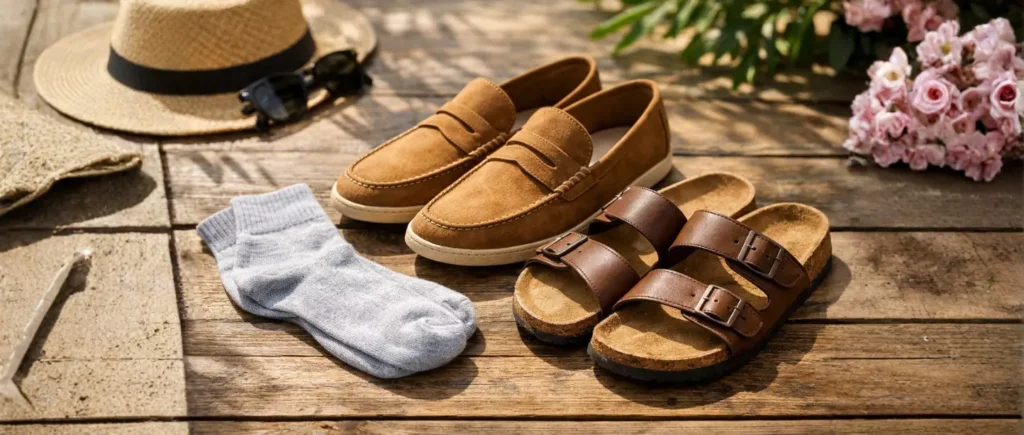
- Loafers
- Lightweight Casual Shoes
- Open Sandals
This feels cooler in short-duration wear.
2. Cleaner Minimal Style
Sockless styling works well with:
- Cropped trousers
- Slim-fit chinos
- Summer suits
- Smart-casual looks
Loafers without visible socks create a sharp, modern aesthetic.
3. Convenience
No laundry. No matching. Quick wear.
Great for short errands or quick outings.
❌ Downsides of No Socks
- Sweat directly enters shoe
- Faster odor buildup
- Blisters due to friction
- Reduced cushioning
- Shorter shoe lifespan
If you wear closed shoes for 6–8 hours, going sockless daily can become uncomfortable.
Comparison Table: Socks vs No Socks in Summer
| Factor | Wearing Socks | No Socks |
|---|---|---|
| Sweat Control | Excellent (if breathable fabric) | Poor |
| Odor Prevention | High | Low |
| Comfort for Long Hours | Better | Limited |
| Styling Appeal | Depends on sock type | Minimal & modern |
| Shoe Durability | Extended | Reduced |
| Best For | Office wear, long work hours, Safety Shoes | Short outings, loafers, open footwear |
| Blister Prevention | High | Moderate to low |
When Should You Wear Socks in Summer?
1. Office Wear
If you wear Formal Shoes daily, socks are almost essential. Choose:
- Thin cotton socks
- Moisture-wicking fabric
- Neutral colors
This improves breathability while maintaining professional styling.
2. Industrial or Outdoor Work
If you use Safety Shoes, never skip socks.
They:
- Prevent friction injuries
- Absorb sweat
- Improve sole grip
- Provide additional cushioning
In physically demanding environments, sockless wear is not advisable.
3. Long Travel Days
Airport walks, city tours, long commutes — socks reduce fatigue and friction.
When Is It Okay to Skip Socks?
1. With Open Sandals
Sandals are designed for airflow. Wearing socks with Sandals in summer traps heat unless medically required.
2. Short Casual Outings
If you’re stepping out briefly in breathable Casual Shoes, going sockless can be fine — provided:
- Shoes are clean
- Insoles are odor-resistant
- Weather is not extremely humid
3. Loafers with No-Show Alternatives
If you love sockless style, consider invisible liner socks. They give protection without affecting appearance.
Loafers without visible socks are stylish — but completely sockless daily wear can damage the shoe interior.
Fabric Matters More Than You Think
If you choose socks in summer, fabric choice determines comfort.
Best Summer Sock Materials:
- Cotton blends
- Bamboo fiber
- Moisture-wicking athletic fabric
Avoid:
- Thick wool
- Heavy synthetic polyester
- Non-breathable blends
Breathability + moisture control = summer comfort.
Common Mistakes People Make
- Wearing thick winter socks in summer
- Going sockless in leather shoes daily
- Ignoring shoe hygiene
- Not rotating footwear
- Wearing damp socks
Foot health is directly tied to daily comfort.
Foot Health & Comfort Insight
Sweaty feet increase friction. Friction causes:
- Blisters
- Skin peeling
- Odor
- Discomfort during long hours
If you experience:
- Frequent sweating
- Smelly shoes
- Slipping inside footwear
Switch to breathable socks immediately.
Styling Guide: What Works Best?
| Footwear Type | Socks or No Socks? | Recommendation |
|---|---|---|
| Formal Shoes | Socks | Thin breathable cotton |
| Casual Shoes | Both | Depends on duration |
| Boots | Socks | Always recommended |
| Loafers | No-show socks | For style + hygiene |
| Sandals | No socks | For airflow |
| Safety Shoes | Socks | Mandatory for comfort |
Pros & Cons Summary
Wearing Socks in Summer
Pros
- Sweat absorption
- Odor control
- Comfort during long hours
- Increased shoe durability
Cons
- Can feel warm if wrong fabric
- Styling limitations
Going Sockless
Pros
- Airy feel
- Minimal look
- Quick convenience
Cons
- Hygiene issues
- Shoe damage
- Blister risk
- Limited support
Final Verdict: What’s Better?
There is no one-size-fits-all answer in the Socks vs No Socks in Summer debate.
It depends on:
- Duration of wear
- Type of footwear
- Weather humidity
- Personal sweat level
- Activity intensity
Smart Rule:
- Closed shoes for long hours → Wear breathable socks
- Open footwear → Skip socks
- Loafers → Use no-show liners
- Heavy-duty work shoes → Always wear socks
The goal isn’t fashion alone — it’s comfort, breathability, hygiene, and durability.
Make your choice based on function first, style second.
Your feet carry you all day — treat them right.
FAQs
1. Is it unhealthy to wear shoes without socks in summer?
Yes, especially with closed shoes. It increases sweat buildup and infection risk.
2. Are no-show socks better than going completely sockless?
Yes. They provide protection without affecting styling.
3. Do socks reduce shoe odor?
Absolutely. They absorb sweat and prevent bacteria buildup.
4. Can I wear socks with Sandals?
It’s generally not recommended in hot weather unless medically required.
5. What are the best socks for summer?
Thin cotton or moisture-wicking breathable fabrics.
6. Do socks improve foot support?
They add mild cushioning and reduce friction but don’t replace proper shoe support.