Long office hours are tough on your feet. Standing during presentations, walking between departments, climbing stairs, or commuting daily can quickly turn stylish footwear into a painful mistake. That is why choosing the most comfortable office Shoes for women is not just about appearance. It is about foot health, posture, productivity, and long-term comfort.
The right pair of office shoes should provide proper cushioning, arch support, breathability, and stability while still matching professional outfits. Whether you work at a desk, in retail, healthcare, education, or corporate settings, comfortable footwear makes a noticeable difference in daily performance.
This guide explains how to choose the right pair, which styles work best, common mistakes to avoid, and practical buying advice based on real-world use.
Why Comfortable Office Shoes Matter
Office environments may seem low impact, but they create continuous strain on the feet.
Daily Stress Your Feet Experience
• Long hours of standing during meetings
• Walking on hard tile or concrete floors
• Poor sitting posture affecting foot pressure
• Swelling due to limited movement
• Improper shoe structure causing heel pain
Uncomfortable shoes often lead to:
• Plantar fasciitis
• Heel pain
• Lower back strain
• Knee stress
• Fatigue and poor posture
Good office footwear absorbs shock, distributes body weight evenly, and supports natural foot alignment.
Key Features of the Most Comfortable Office Shoes for Women
Comfort is not accidental. It comes from specific structural features.
1. Arch Support
Proper arch support prevents strain on the plantar fascia ligament and reduces fatigue.
Best for:
• Flat feet
• High arches
• Long standing hours
2. Cushioning and Shock Absorption
Memory foam, EVA midsoles, and padded insoles reduce impact on joints.
Look for:
• Dual-layer cushioning
• Soft heel padding
• Flexible forefoot area
3. Breathable Materials
Poor ventilation leads to sweating and discomfort.
Best materials:
• Genuine leather
• Knit mesh
• Soft suede linings
Breathable shoes maintain hygiene and prevent odor.
4. Stable Heel Structure
High heels shift weight unnaturally and cause pain.
Recommended:
• Block heels under 2 inches
• Wedge heels with platform balance
• Flat structured soles
5. Proper Toe Box Space
Narrow fronts squeeze toes and cause blisters.
Choose:
• Almond or round toe shapes
• Adequate toe wiggle space
• Soft interior lining
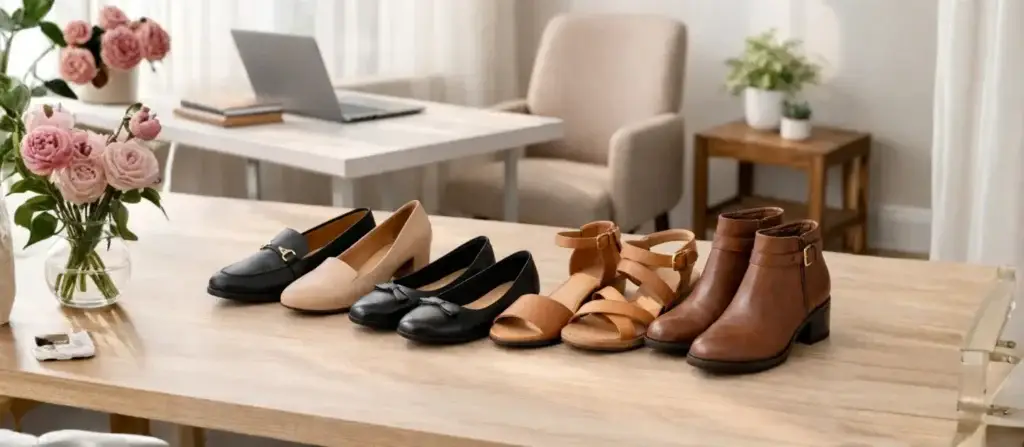
Best Types of Comfortable Office Shoes for Women
Different workplaces demand different footwear styles.
Comfortable Loafers
Loafers are ideal for professionals who want effortless comfort and easy wear.
Benefits:
• Slip-on convenience
• Flat stable sole
• Excellent for walking between departments
• Works with trousers and formal dresses
Women who prefer polished business attire often choose structured loafers similar to MEN’s Loafers, designed for stability and prolonged wear.
Low-Heel Formal Shoes
Perfect for corporate offices where a sharp appearance is important.
Features:
• Small block heel for posture
• Cushioned insole
• Slip-resistant outsole
• Professional styling
For highly formal workplaces, structured WOMEN footwear inspired by MEN’s Formal Shoes provides both authority and long-lasting comfort.
Supportive Ballet Flats
Modern ballet flats now come with orthopedic improvements.
Ideal for:
• Desk jobs
• Teachers
• Front-desk professionals
Look for:
• Arch inserts
• Padded insoles
• Anti-slip rubber soles
Avoid ultra-thin soles as they lack shock absorption.
Office-Appropriate Sandals
In warmer climates, breathable footwear prevents overheating.
Choose:
• Closed-toe sandals
• Back-strap sandals
• Cushioned footbeds
Professionals who stand frequently may prefer supportive WOMEN Sandals with contoured soles that reduce foot fatigue.
Office Boots for Cold Weather
Ankle-length boots offer support and protection during winter commutes.
Advantages:
• Extra ankle stability
• Warm interior lining
• Thick sole cushioning
• Professional appearance with trousers
WOMEN Boots with low block heels provide better posture than stilettos while remaining comfortable throughout the day.
Comparison Table: Office Shoe Types for Women
| Shoe Type | Comfort Level | Best For | Heel Height | Breathability | Style Formality |
|---|---|---|---|---|---|
| Loafers | High | Walking, long office hours | Flat | Medium | Business casual |
| Low-Heel Formals | High | Corporate environments | Low block heel | Medium | Highly formal |
| Ballet Flats | Medium-High | Desk jobs | Flat | Medium | Smart casual |
| Office Sandals | Medium-High | Warm climates | Flat/low wedge | High | Semi-formal |
| Ankle Boots | High | Cold weather, commuting | Low block heel | Medium | Formal |
How to Choose the Right Office Shoes Based on Job Type
Desk Job Professionals
Prioritize:
• Soft cushioning
• Flexible soles
• Lightweight materials
Best picks:
• Ballet flats
• Loafers
• Low wedges
Teachers and Retail Workers
Require shoes that handle constant walking and standing.
Prioritize:
• Arch support
• Slip-resistant outsole
• Shock-absorbing midsole
Best picks:
• Cushioned loafers
• Supportive low heels
• Ergonomic sandals
Corporate and Business Executives
Need professional styling with hidden comfort features.
Prioritize:
• Premium leather
• Structured heel support
• Elegant silhouette
Best picks:
• Block heel pumps
• Leather loafers
• Sleek ankle boots
Materials That Improve Long-Term Comfort
Genuine Leather
• Molds to foot shape
• Highly durable
• Better airflow than synthetic materials
Memory Foam Insoles
• Adapts to foot pressure
• Reduces heel pain
• Ideal for long hours
Rubber Outsoles
• Strong grip
• Shock absorption
• Slip resistance on polished floors
Common Mistakes Women Make When Buying Office Shoes
Choosing Style Over Support
Stylish but flat-thin soles cause long-term foot damage.
Ignoring Proper Fit
Shoes that are tight cause blisters. Loose shoes create friction.
Always measure feet in the evening when slightly swollen.
Buying High Heels for Daily Wear
Stilettos shift body weight forward and strain toes and knees.
Not Checking Sole Grip
Smooth soles slip on tiles and polished office floors.
Pros and Cons of Comfortable Office Shoes
Pros
• Reduced foot fatigue
• Better posture
• Improved productivity
• Long-term joint protection
• Professional appearance
Cons
• Premium comfort materials increase cost
• Some orthopedic designs may look less stylish
• Cushioned soles may feel bulky initially
Expert Tips for All-Day Office Comfort
• Rotate between two pairs to reduce wear pressure
• Use gel insoles for added cushioning
• Keep heel height under 2 inches
• Break in new shoes gradually
• Use moisture-wicking socks or liners
• Stretch shoes slightly if tight near toes
How Comfortable Office Shoes Improve Foot Health
Proper footwear:
• Maintains spine alignment
• Reduces ankle strain
• Prevents arch collapse
• Improves walking posture
• Minimizes lower back stress
Women working long shifts benefit significantly from shock-absorbing soles and ergonomic footbeds.
When to Replace Office Shoes
Replace shoes if you notice:
• Worn-out soles
• Reduced cushioning
• Heel imbalance
• Visible creasing near toe bend
• Foot pain after short wear
Most daily office shoes last 8 to 12 months depending on usage and material quality.
FAQs: Most Comfortable Office Shoes for Women
1. What heel height is best for office comfort?
Heels under 2 inches with block or wedge structure provide the best stability and posture.
2. Are flat shoes good for long office hours?
Yes, but only if they include arch support and cushioned insoles.
3. Which material is best for breathability?
Genuine leather and knit mesh allow airflow and prevent sweating.
4. Can sandals be worn in offices?
Yes, closed-toe and structured Sandals work well in business casual environments.
5. Are memory foam insoles good for work shoes?
Yes, they reduce heel pressure and improve shock absorption.
6. How tight should office shoes fit?
They should feel snug but allow toe movement without friction.
7. Do expensive office shoes last longer?
Typically yes, because premium materials improve durability and foot support.
Conclusion
Choosing the most comfortable office shoes for women is a practical decision that affects daily performance, posture, and long-term foot health. The best options combine cushioning, structured support, breathable materials, and professional styling suitable for workplace environments.
Whether selecting loafers, low heels, supportive sandals, or boots, prioritizing ergonomic construction ensures comfort during long hours without compromising appearance. Investing in quality footwear reduces fatigue, improves confidence, and supports healthier movement throughout the workday.
Make decisions based on work type, standing duration, climate, and foot structure to find the ideal pair.